

The ghorfa ensemble
Notice how storage chambers are grouped around shared space, viewing from authorised areas rather than climbing for a photograph.
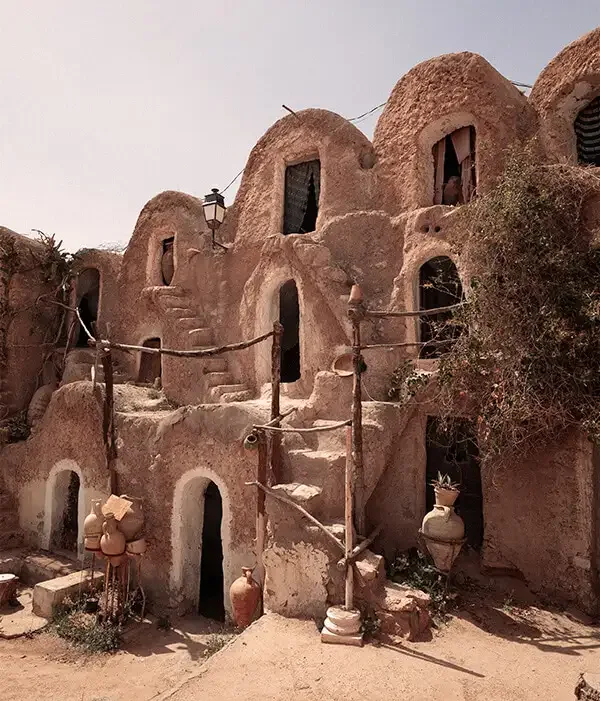
Medenine is a living southern Tunisian town where surviving ghorfas introduce the architecture of collective storage. Their vaulted forms and grouped arrangement tell a story of protecting provisions and organising shared life in a dry environment.
Look at function as well as form. A local explanation can distinguish the original use from later housing, workshops and present-day adaptations, making the buildings more than a backdrop on a longer southern circuit.
Notice how storage chambers are grouped around shared space, viewing from authorised areas rather than climbing for a photograph.
Leave room for a walk and local trade, remembering that Medenine continues beyond its best-known heritage corner.
Other ksour and hill villages are separate places with their own access. Choose a small route rather than assuming all are interchangeable.
Check which parts of the historic ensemble or any exhibits are open, arrange transport and allow for sun and uneven ground. Ask locally before adding farther rural stops.
Group nearby stops and confirm transport back before setting out. Ask about steps, uneven ground and accessible alternatives if these affect your day.
Confirm opening arrangements, visitor rules and any advance booking with the site or local operator for your travel date.
See current visitor reviews and practical information from Google Maps.
View on Google MapsDistances shown are straight-line estimates, not road distances or driving times. Check the route for your dates and transport.
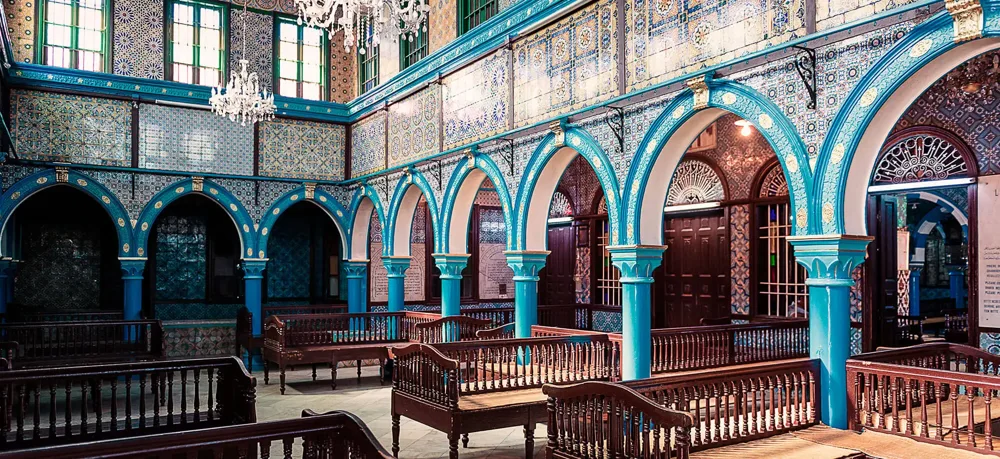
About 61 km in a straight line
Check the route ↗
About 228 km in a straight line
Check the route ↗
Do not climb fragile roofs or steps without authorisation. Respect residents and traders, and ask before entering occupied chambers or taking portraits.
Tell us what you would enjoy here, and we can discuss how this stop fits your wider journey.