

Imperial architecture
Use informed explanation to connect courtyards and layouts instead of trying to photograph every gate without context.
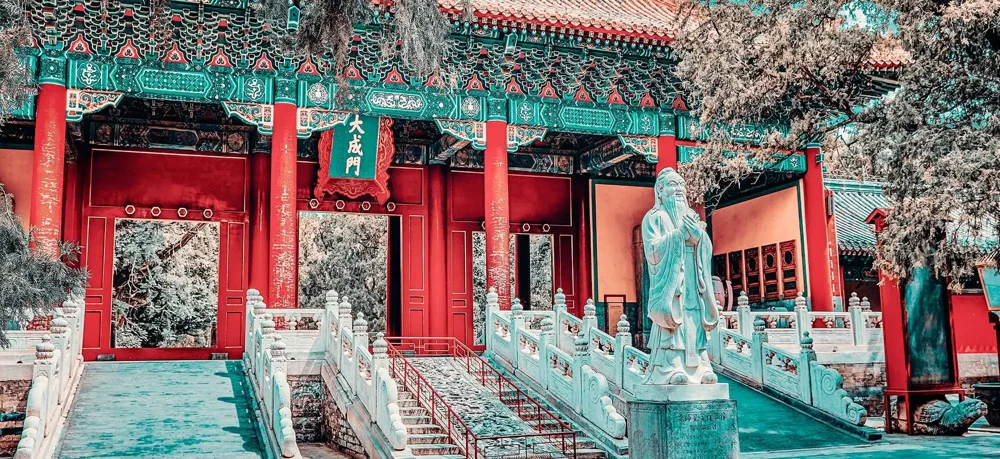
Beijing brings imperial sites, religious spaces and neighbourhood streets into a city that rewards several days. A courtyard and a meal can help the larger history feel connected to people, rather than a procession of monumental names.
Give the Forbidden City and Temple of Heaven their own appropriate time, then choose a considered hutong walk. A Great Wall outing belongs to a separate day with a chosen section, real travel time and a route suited to your group.
Use informed explanation to connect courtyards and layouts instead of trying to photograph every gate without context.
Consider the site as a distinct chapter with current access checked rather than an extra entrance in an already crowded morning.
Choose an appropriate hutong area and leave time for food, respecting homes and people who use the narrow streets daily.
Check current booking, identification and entry arrangements for each major visit before fixing the route for your dates.
Discuss the actual section, surfaces, stairs and return journey; famous photographs do not show every practical difference.
Group nearby visits with pauses instead of repeatedly crossing a large city to complete a list of attractions.
See current visitor reviews and practical information from Google Maps.
View on Google MapsDistances shown are straight-line estimates, not road distances or driving times. Check the route for your dates and transport.
About 1,068 km in a straight line
Check the route ↗
About 1,782 km in a straight line
Check the route ↗
Follow heritage-site rules, leave residential entrances clear and ask before close photographs. A historic neighbourhood is still a place where people live.
Tell us your balance of imperial history and street-level life, so Beijing can begin or complement a coherent China journey.