

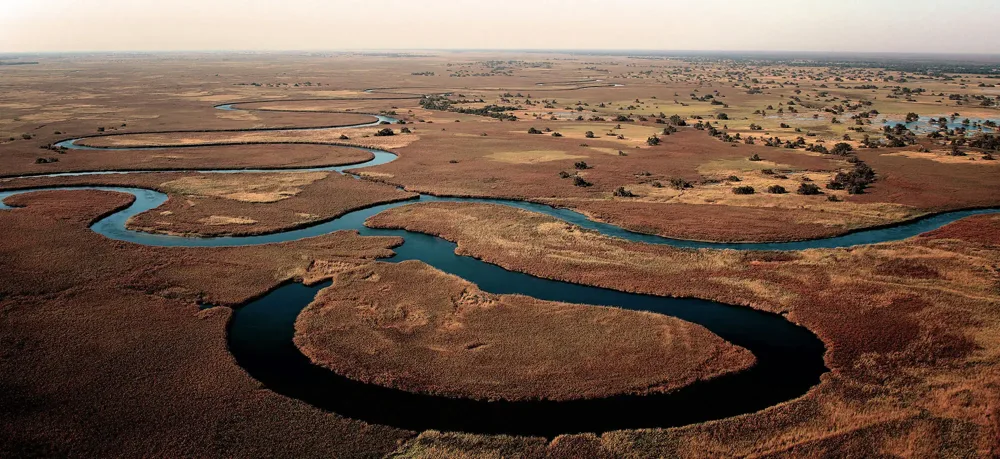
Old river shapes
Notice the lines of dry valleys and open ground, not only animals moving across them.
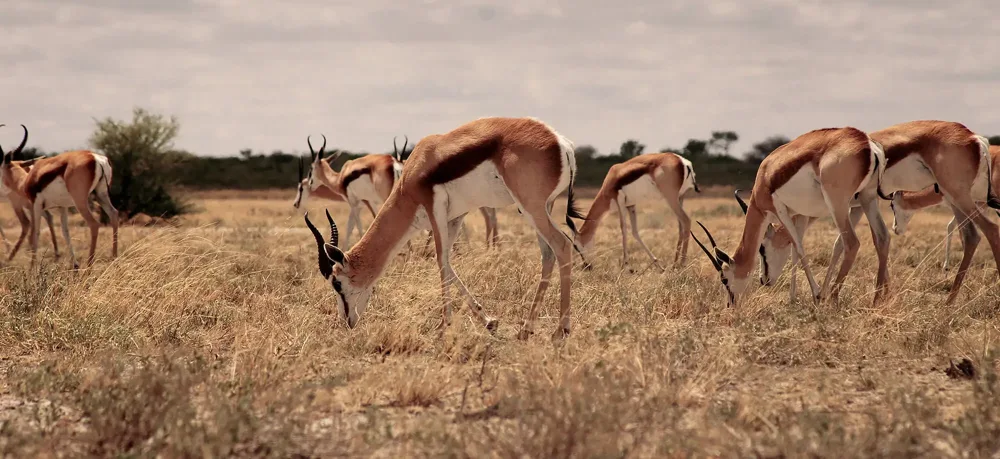
Let the open country change the scale of your day.
Take a closer lookThe Central Kalahari offers a different Botswana from the delta's channels. Dry riverbeds, open grassland and wide ground draw attention to distance, and wildlife observation becomes part of reading that larger landscape.
Plan it as a distinct remote leg with suitable transport and enough time, rather than a casual add-on between camps. A considered stay lets changing conditions and animal movement influence the day without a promised checklist.
Notice the lines of dry valleys and open ground, not only animals moving across them.
Consider the northern reserve landscape within an appropriate local route, with quiet time rather than repeated long drives.
Give dry-country habitats their own attention instead of expecting a water-based safari in another setting.
Confirm suitable vehicles, supplies, guiding and overnight arrangements before committing the reserve to your route.
Check actual track conditions and available camp arrangements for the period rather than assuming year-round routes stay identical.
Reserve enough nights to justify the approach and avoid squeezing another distant region into the same travel day.
See current visitor reviews and practical information from Google Maps.
View on Google MapsDistances shown are straight-line estimates, not road distances or driving times. Check the route for your dates and transport.
About 291 km in a straight line
Check the route ↗
About 309 km in a straight line
Check the route ↗
About 476 km in a straight line
Check the route ↗Stay on established tracks, keep wildlife space and carry all rubbish out. Cultural encounters should be invited and locally arranged, never assumed.
Tell us whether the dry country's remoteness appeals, so we can consider its place within a realistic Botswana journey.