



Separate archaeological areas
Understand the difference between the headland remains and the Al-Bass area before imagining a walking route.
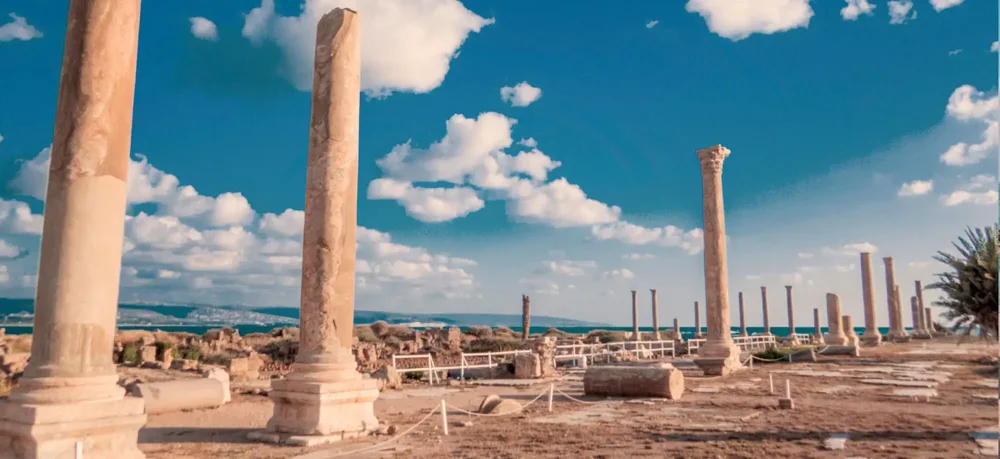
A maritime city with more than one historical layer.
Take a closer lookTyre, or Sour, on Lebanon's southern coast carries Phoenician history alongside substantial later remains. Its UNESCO-listed archaeology includes distinct areas rather than one compact ruin; the Roman hippodrome and other structures belong within a larger reading of the city's past.
The modern city is a home and working coastal place, not an extension of an archaeological display. Present security conditions in Lebanon and the south require current official advice before any travel discussion. This page describes heritage, without confirming access, transport or the appropriateness of a visit.
Understand the difference between the headland remains and the Al-Bass area before imagining a walking route.
A monumental structure becomes more meaningful when related to its historical use and surrounding remains.
Avoid assuming every visible feature belongs to the same period. Informed interpretation can connect the layers without simplifying them.
Consult current official regional guidance and independently assess whether any journey should be considered.
Do not rely on old tickets, photographs or tour routes as evidence that sites are accessible.
If future conditions permit planning, confirm entrances, walking terrain and transfers for the actual sites.
See current visitor reviews and practical information from Google Maps.
View on Google MapsDistances shown are straight-line estimates, not road distances or driving times. Check the route for your dates and transport.

About 36 km in a straight line
Check the route ↗
About 124 km in a straight line
Check the route ↗
About 129 km in a straight line
Check the route ↗Respect residents, conservation boundaries and all closures. Do not enter damaged areas or remove any archaeological material.
Learning about Tyre can begin now; current circumstances must determine whether an on-site visit is appropriate.